Experimental F1 hybrids in the field
46 new varieties now in testing
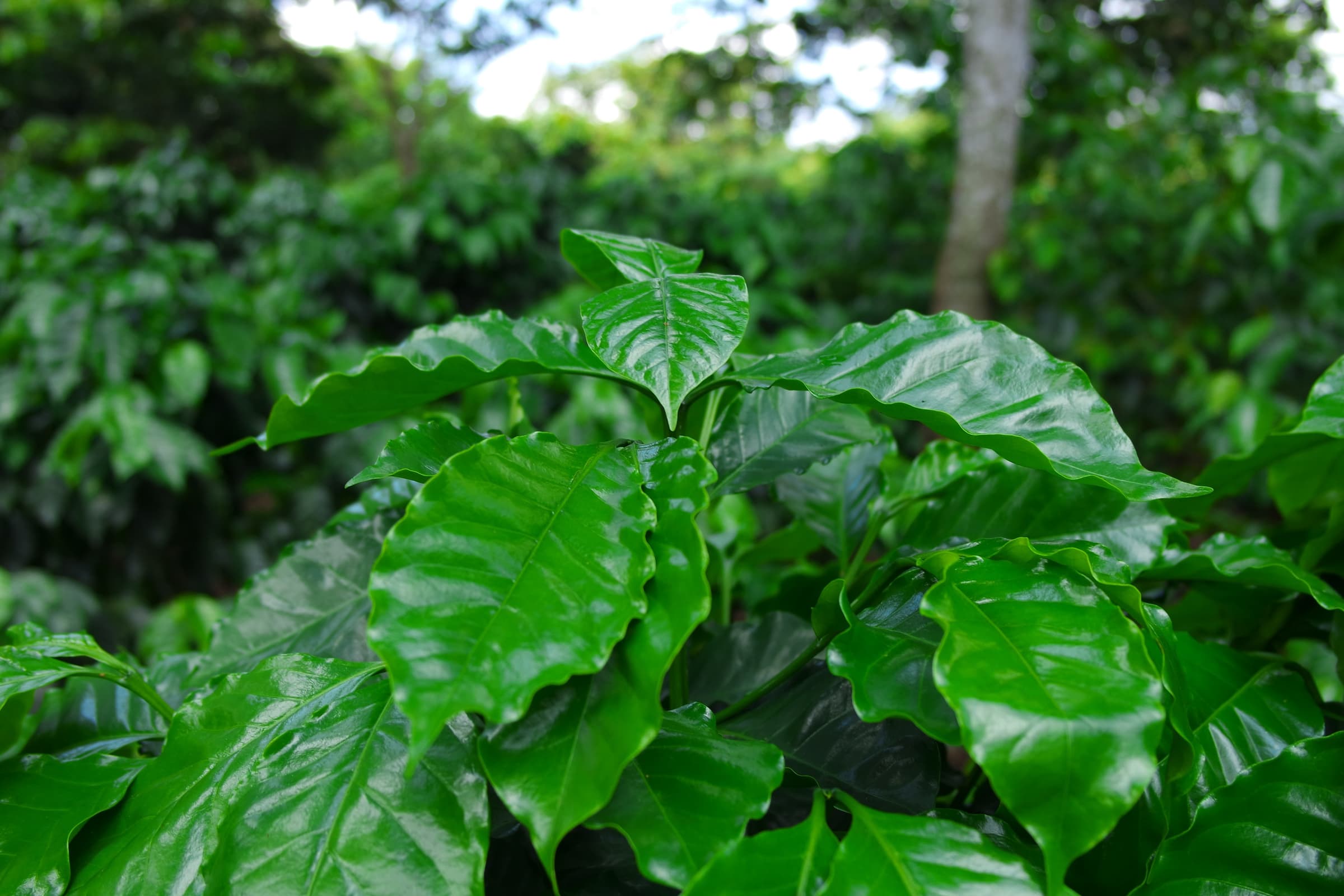
One of the new F1 hybrid varieties at the WCR Research Farm in El Salvador, in June 2017. The plants were created in 2016 and transferred to the field in 2017 for evaluation.
Today’s best coffee varieties are no match for the environmental threats of the 21st century—changing weather patterns, increased temperatures, and new disease and insect prevalence. This creates conditions for a potentially disastrous decline in supply in the coming decades. Focusing on coffee genetic improvement through the breeding of new varieties and advanced research in the lab to identify key genes and markers is vital to ensure the future of coffee. This is the cornerstone strategy of our work.
Around the world, less breeding on coffee is done now than 50 years ago, but the threats now are greater In fact, coffee is one of the most under-innovated crops in the world. Today, less breeding is done on coffee than on watermelons! World Coffee Research’s breeding program is the only international, precompetitive coffee-breeding program in the world.
In 2016, we created 46 new F1 hybrids. These new F1 hybrids will be studied in the field for 4–5 crop cycles, between 2017 and 2021. All of the varieties are currently undergoing field evaluation at the WCR research farm in El Salvador. The varieties will also begin testing in Rwanda in 2018.
Varieties will be selected on the basis of:
- High, stable yields
- Resistance to diseases like leaf rust
- Cup quality
- Climate resilience
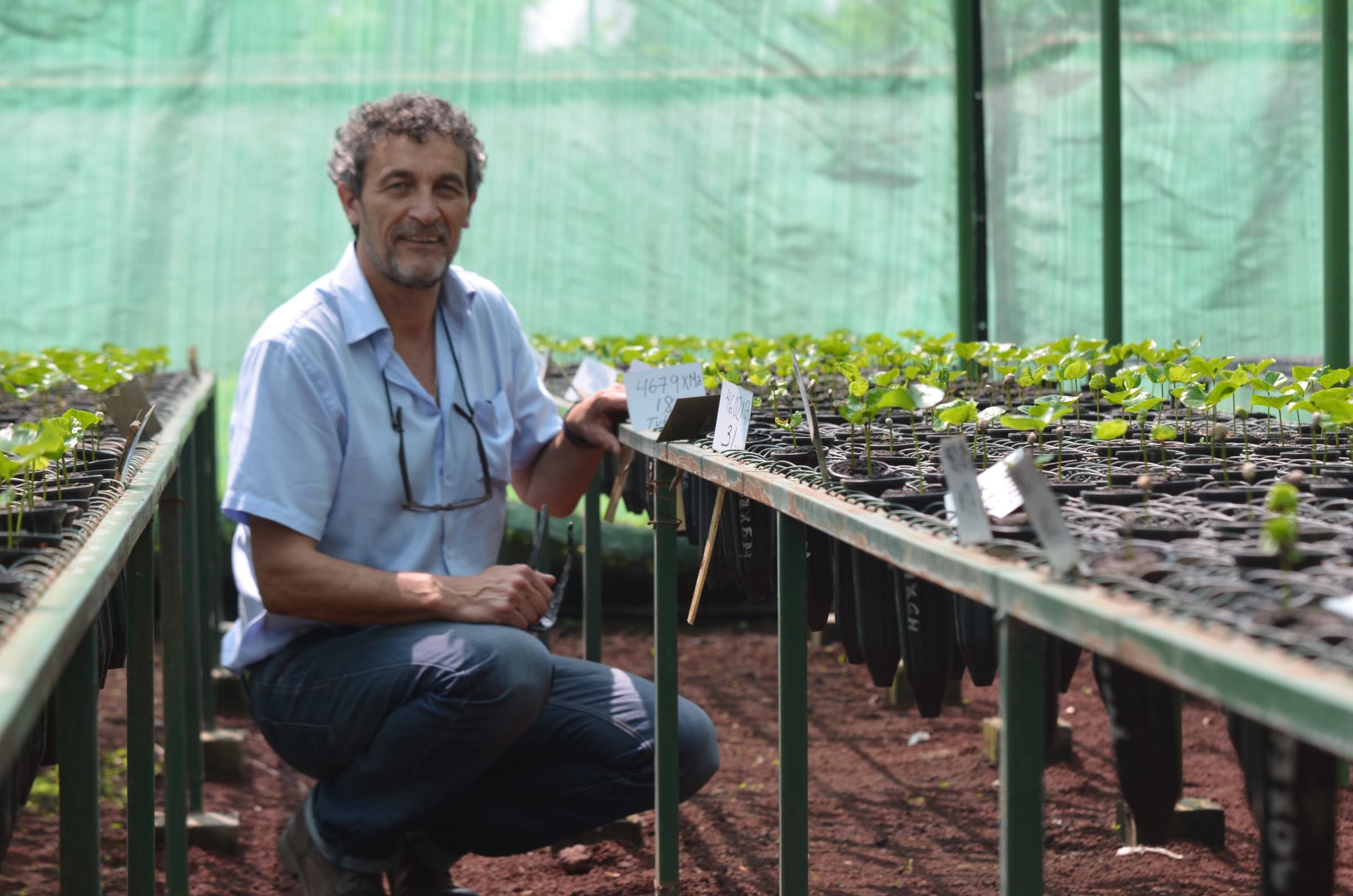
Coffee breeder Benoit Bertrand with baby F1 hybrids plants in the nursery. Source: Sara Bogantes
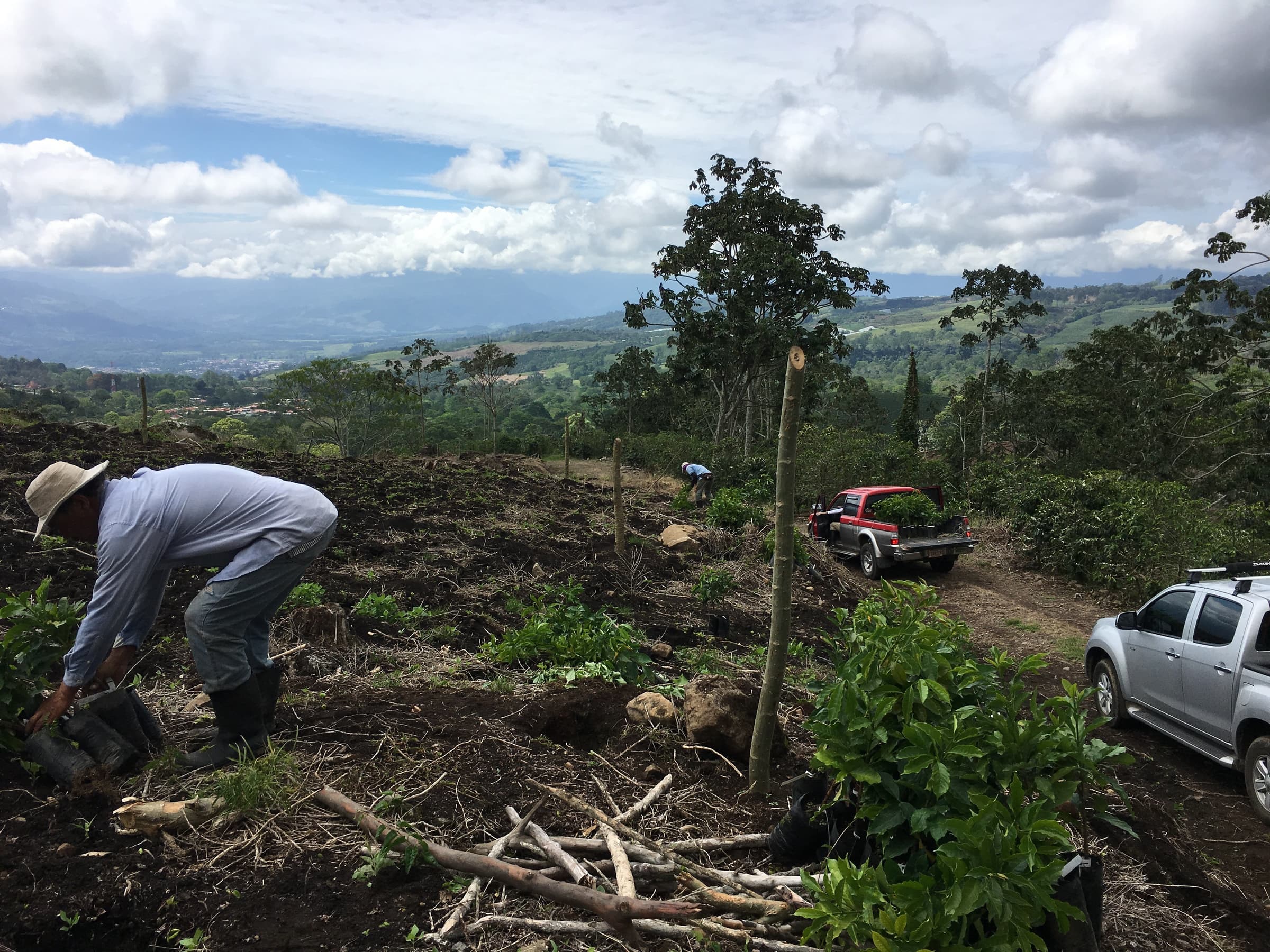
The experimental F1 hybrids are being grown and evaluated in three locations in Central America. Here, they are being transfered to the field of a partner farm in Costa Rica.