Considerations for replanting arabica coffee farms
About this guide
Climate change is reshaping the world’s coffee production landscape. It is altering land suitability, shifting disease pressures, and raising real business risks for companies and producers that depend on stable supply. Replanting projects can help the coffee sector adapt.
The resource is designed for coffee supply chain professionals and outlines critical steps for deploying World Coffee Research (WCR)'s tools in decision-making to de-risk renovation investments and power long-term sustainability. It offers a structured roadmap to support supply chain leaders in using WCR tools to make informed, future-focused renovation plans through three core decision points, including variety selection, plant quality, and plant health and traceability.
All tools and resources that appear in this guide are available in English and Spanish.

Considerations for replanting arabica coffee farms
Variety selection
Choose a variety or varieties that will offer maximum performance (e.g., resiliency, yield, disease resistance, cup quality) within your specific production environment.
- Evaluate unique factors to your location such as altitude, soil conditions, sun exposure, temperature, precipitation patterns, etc., and the presence of diseases such as coffee leaf rust, coffee berry disease, or coffee wilt disease in your area. If disease is present, you can explore selecting disease-resistant varieties.
- Consult local authorities and technical assistance programs for information on recommended varieties in your area.
- Evaluate performance characteristics and climate adaptation potential of different varieties to see which might fit your location.
- Consider what management plan will be feasible to implement in terms of nutrition, disease and pest control, shade management, and more according to the profile of farmers in the specific value chain.
- Consider the propagation needs of your project. Some varieties are able to be propagated from seed, but others (i.e., hybrids) should only be reproduced through clonal propagation from trusted nurseries. Seeds from varieties that require clonal propagation will not have the same characteristics as parent plants.
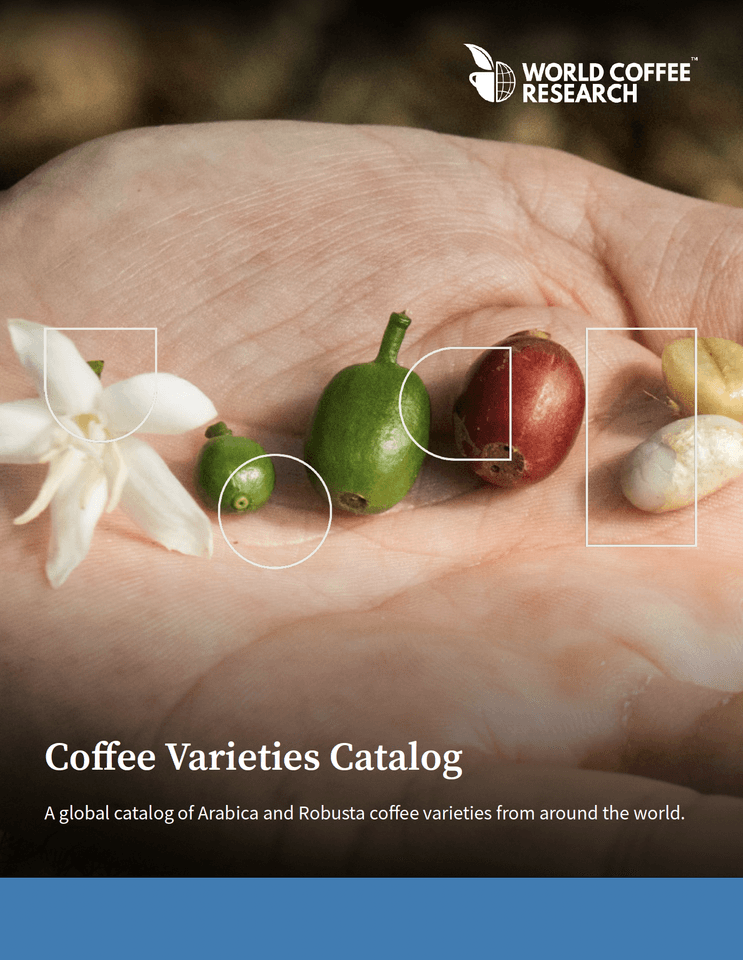
Tools and resources
Use the tools and resources below to guide your decision-making.

Plant quality
Obtain seeds and/or plants that conform genetically to the specific profile of the variety or varieties you have selected to ensure they will perform to their full potential in the field.
- Identify promising seed sources. Consult reputable sources, such as national authorities, local technical assistance programs, or World Coffee Research resources below, to find seed sources that offer genetic traceability,
- Seek genetic traceability. Ask seed or seedling providers for genetic traceability of the varieties they offer, examine the phytosanitary quality of plants, and evaluate sources for their implementation of best management practices before purchasing.
Tools and resources
Use the tools and resources below to guide your decision-making.

Genetically confirmed seed lots

Coffee arabica KASP genetic marker panel for low-density genotyping
Plant health and traceability
When procuring planting new varieties, work with your nursery or propagation provider to ensure they are following recommended best practices at the nursery level to maximize potential performance.
- Follow agronomic recommendations. Ensure the management of the plants in the nursery or seed lot follows agronomic recommendations (e.g., nutrition, pest management, pest control, soil) for the specific varieties you have selected.
- Maintain traceability and reduce cross-pollination risks. If plants are being used as a source of seed, ensure that best practices for plant health, avoiding cross pollinations between varieties, and maintaining traceability (including during post-harvest processing) are followed.
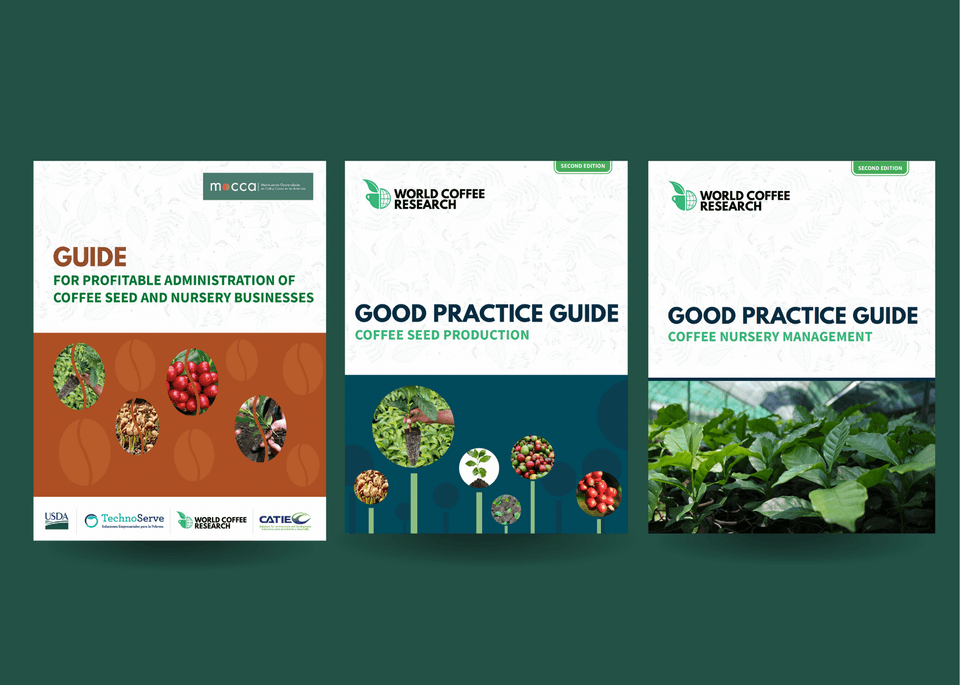
Tools and resources
Use the tools and resources below to guide your decision-making.
Disclaimer. WCR is a globally oriented organization and provides tools that can support a wide range of stakeholders across the coffee sector and does not specialize in agronomy. With this, WCR recognizes that specific agronomic practices, such as plant spacing, shade management, and soil health, must be locally tailored to fit the producer’s unique environmental conditions and resource availability, and also recommends consulting relevant resources at a regional or national level in addition to its own tools.